
Are You Ready for Program Officer Jobs in Natural Resources and Climate Change in North East Nigeria?
- 1 day ago
- 9 min read
A strong Program Officer in Natural Resources Management and Climate Change does more than write reports. The role sits where climate risk, livelihoods, community trust, donor rules, field realities, and government coordination meet.
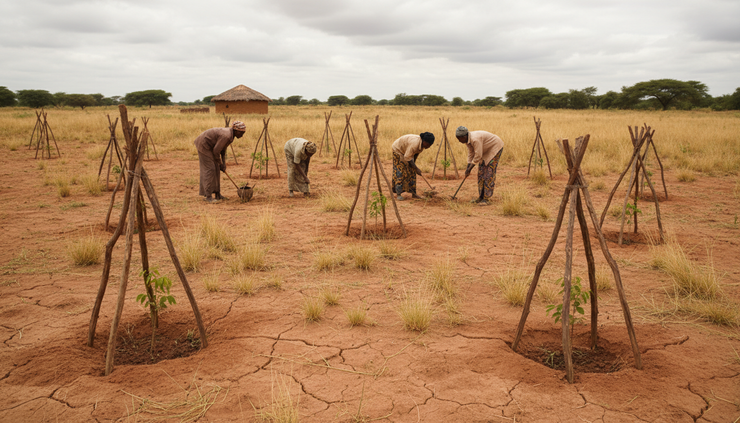
In North East Nigeria, that mix is especially demanding. Programs may involve land restoration, watershed protection, climate-smart agriculture, fuel-efficient cooking, disaster risk reduction, conflict-sensitive natural resource governance, or support to communities affected by displacement. The job requires technical understanding, but also patience, judgment, and the ability to turn plans into visible results.
This quiz is designed for two groups:
Potential candidates who want to know whether they are ready for the role
HR managers and recruiters who need a practical way to assess readiness beyond a CV
Use it as a self-check, interview preparation tool, or early screening guide.
How to take the quiz
Choose the answer that best reflects your current experience, not the answer you think sounds best.
Score yourself as follows:
A equals 3 points
B equals 2 points
C equals 1 point
D equals 0 points
At the end, add up your score out of 30.
This quiz is not a hiring decision by itself. It helps identify strengths, gaps, and areas for development before applying for or recruiting into a Program Officer role.
The 10-question readiness quiz
1. How well do you understand natural resources management in fragile or conflict-affected settings?
A. I have worked on land, water, forest, grazing, or livelihood programs in communities affected by conflict or displacement.
B. I understand the concepts and have supported related activities, but not as a lead officer.
C. I have classroom or training knowledge, with little field application.
D. I am new to natural resources management.
What this question assesses
A strong candidate should understand that natural resources are tied to livelihoods, identity, movement, and local power. In North East Nigeria, water access, farming land, firewood collection, flood risk, grazing routes, and tree cover can affect both survival and social tension.
2. How confident are you in applying climate change concepts to program design?
A. I can explain climate risks, adaptation measures, mitigation links, and how they apply to project activities.
B. I can explain basic climate change concepts and connect them to some field activities.
C. I know common terms but struggle to apply them in program planning.
D. I cannot yet explain climate change in a program context.
What this question assesses
Program Officers need to translate climate language into practical action. That may mean supporting drought-tolerant crops, soil and water conservation, early warning messages, flood preparedness, community nurseries, or energy-saving practices.
3. What is your experience with community engagement?
A. I have planned and led community consultations with women, youth, traditional leaders, local authorities, and vulnerable groups.
B. I have participated in community meetings and helped collect feedback.
C. I have limited experience speaking directly with community members.
D. I have not worked with communities before.
What this question assesses
Community engagement is not just attendance. It involves listening, managing expectations, documenting concerns, and making sure excluded groups can safely participate. A Program Officer must know when to speak, when to listen, and when to adjust plans.
4. How strong are your project planning and implementation skills?
A. I can develop work plans, activity budgets, procurement requests, field movement plans, and implementation trackers.
B. I can support planning tools when given guidance.
C. I understand planning in theory but need close supervision.
D. I have not managed program activities before.
What this question assesses
A good idea becomes a result only when someone can organize it. Program Officers often coordinate trainings, field visits, vendor requests, partner follow-up, transport, attendance records, and activity reports. Missing small details can delay an entire activity.

5. How familiar are you with monitoring, evaluation, accountability, and learning?
A. I can help define indicators, collect data, verify outputs, track outcomes, and use feedback to improve activities.
B. I can collect data and support reporting tools designed by others.
C. I have used forms or registers, but I do not fully understand indicators.
D. I have no practical MEAL experience.
What this question assesses
MEAL is central to climate and natural resources programming. Counting seedlings distributed is not enough. A Program Officer should ask whether seedlings survived, who benefited, whether women could access resources safely, and whether the activity reduced risk or improved livelihoods.
6. How do you handle coordination with government, partners, and local structures?
A. I have coordinated with relevant ministries, local government teams, community structures, and partner organizations.
B. I have attended coordination activities but did not lead follow-up.
C. I have limited experience with external coordination.
D. I have not coordinated with external stakeholders.
What this question assesses
In North East Nigeria, successful programs often require coordination with environmental agencies, agricultural extension workers, disaster management actors, local government departments, and community leadership. The Program Officer must keep relationships respectful and clear without making promises the project cannot keep.
7. How strong is your reporting and documentation?
A. I write clear activity reports, success stories, risk updates, case notes, and donor-facing summaries with evidence.
B. I can write basic reports but need editing and structure.
C. I struggle to turn field activities into clear written updates.
D. I have little or no reporting experience.
What this question assesses
If it is not documented, it is hard to prove. Reports help managers, donors, communities, and partners see progress and solve problems. Strong documentation also protects the organization when activities change due to security, weather, access, or community feedback.
8. How do you manage risk during field implementation?
A. I actively assess safety, access, conflict sensitivity, environmental impact, safeguarding, and weather-related risks before and during activities.
B. I follow safety guidance and report concerns when I notice them.
C. I know risk matters but often rely on others to identify it.
D. I rarely think about risk unless something goes wrong.
What this question assesses
This role requires sound judgment. Risks may include road access, flooding, tension over land use, exclusion of certain groups, harm to natural habitats, or safeguarding concerns. Readiness means spotting risks early and knowing when to escalate.
9. What technical tools can you use for the role?
A. I can use common data collection tools, spreadsheets, maps or GPS basics, reporting templates, and photo documentation standards.
B. I can use spreadsheets and mobile data collection tools with support.
C. I have basic digital skills but need training for field data tools.
D. I am not confident using digital tools for program work.
What this question assesses
The role does not always require advanced GIS or climate modeling. Still, a Program Officer should be comfortable with clean data, simple maps, coordinates, photos with consent, activity databases, and organized files.

10. How do you define success in this role?
A. Success means communities see useful change, the project meets quality standards, risks are managed, learning is captured, and results can be verified.
B. Success means activities are completed on time and reports are submitted.
C. Success means beneficiaries attend activities and receive inputs.
D. Success means doing what was assigned without questioning the results.
What this question assesses
A mature Program Officer thinks beyond activity completion. Success includes relevance, inclusion, sustainability, evidence, and responsible use of resources. For natural resources and climate change work, success also means avoiding harm and strengthening local capacity.
What your score means
Score | Readiness level | What it means |
24 to 30 | Strong fit | You appear ready for Program Officer responsibilities and may be competitive for similar roles. Focus on sharpening leadership, donor reporting, and technical depth. |
18 to 23 | Good potential | You have a useful base, but some gaps may limit performance. Target training and field exposure before taking on a full lead role. |
10 to 17 | Developing readiness | You may be better suited for assistant, intern, or project support roles while building experience. |
0 to 9 | Early stage | Start with foundational learning in climate change, livelihoods, community engagement, and project implementation. |
A low score should not discourage serious candidates. Many strong Program Officers began as volunteers, enumerators, community mobilizers, agricultural extension support staff, or field assistants. The key is to recognize the gap and build from there.
Key qualifications that make candidates stand out
For Program Officer roles in this field, recruiters often look for a mix of education, field experience, and judgment.
Commonly useful backgrounds include:
Environmental science
Natural resources management
Agriculture
Forestry
Climate change and development
Geography
Disaster risk management
Rural development
Sociology or development studies with relevant field experience
Strong candidates also show practical experience in:
Community-based natural resource management
Climate adaptation or resilience programming
Livelihoods and food security projects
Cash, voucher, or input distribution linked to environmental goals
Watershed, soil conservation, erosion control, or tree planting work
Partner coordination and government engagement
MEAL tools and field reporting
Safeguarding, accountability, and conflict sensitivity
Language and local context also matter. In North East Nigeria, ability to communicate respectfully across communities can improve trust and reduce implementation problems. Local language skills may be a major advantage, depending on the location.
Common shortcomings the quiz can reveal
The quiz is most useful when it points to specific areas for growth.
A candidate may be enthusiastic but weak in reporting. Another may understand climate change but have limited community experience. Someone may know how to distribute inputs but not how to measure whether those inputs improved resilience.
Common gaps include:
Treating climate change as theory rather than a practical programming issue
Weak writing and evidence collection
Limited understanding of conflict sensitivity
Poor follow-up after community consultations
Unclear knowledge of indicators and outcomes
Overreliance on activity counts
Low confidence using spreadsheets or mobile data tools
Limited coordination with government or technical actors
The best candidates are honest about these gaps. They can name what they are learning and show evidence of improvement.

Guidance for HR managers hiring for this role
Recruitment for this role should test more than academic qualifications. A candidate may have a strong degree but struggle in remote field implementation. Another may have modest credentials but excellent community judgment and documentation skills.
Use a layered assessment process.
Screen for evidence, not only titles
When reviewing CVs, look for specific verbs and outputs. Strong CVs usually mention activities such as:
Conducted community consultations
Tracked seedling survival
Supported climate adaptation planning
Prepared field reports
Coordinated with local authorities
Collected and cleaned project data
Managed activity budgets or logistics
Reported risks and lessons learned
Be cautious with vague phrases that do not show what the person actually did.
Add a practical written test
A useful written test could ask candidates to prepare a one-page field activity report from a short scenario. Include details such as attendance, weather disruption, community feedback, and a concern about land access.
Assess whether the candidate can:
Separate facts from opinion
Identify risks
Recommend next steps
Write clearly
Use respectful language
Link activities to project objectives
Use scenario-based interview questions
Ask questions that reflect real field conditions.
Examples:
A community requests more seedlings than the project budget allows. What do you do?
Women report that they cannot safely access a project site. How would you respond?
A field activity is delayed because of heavy rain and road access problems. How do you adjust the plan?
Local leaders disagree about who should benefit from a land restoration activity. What steps would you take?
A donor asks for evidence of climate adaptation results. What would you provide?
These questions reveal judgment, ethics, and practical readiness.
Include technical and behavioral scoring
A strong interview panel should score candidates across several areas:
Assessment area | What to look for |
Technical knowledge | Understands natural resources, climate risk, adaptation, and local environmental issues |
Field delivery | Can plan, implement, document, and follow up on activities |
Community engagement | Shows respect, inclusion, and ability to manage expectations |
Risk awareness | Identifies security, safeguarding, access, environmental, and conflict risks |
Reporting and data | Writes clearly and uses evidence |
Learning mindset | Accepts feedback and improves practice |
How to manage and evaluate performance after hiring
Good recruitment is only the start. Program Officers need clear expectations, regular support, and fair evaluation.
Set performance goals that combine delivery and quality. Do not only measure the number of trainings, seedlings, field visits, or reports. Include quality markers.
Useful performance indicators may include:
Work plans submitted on time and updated when conditions change
Activity reports completed with clear evidence and follow-up actions
Community feedback documented and addressed
Risks identified early and escalated properly
Coordination records maintained with partners and local actors
Data submitted accurately and on schedule
Environmental and safeguarding standards followed
Learning shared during team reviews
Managers should hold regular check-ins that focus on problem solving, not blame. Field teams in North East Nigeria often face access limits, weather changes, security concerns, and community expectations. Performance management should recognize these realities while still requiring accountability.
A practical monthly review can ask:
What was planned?
What was completed?
What changed and why?
What risks came up?
What evidence do we have?
What needs management support?
What should change next month?
That rhythm helps Program Officers grow and helps organizations deliver better programs.
The real sign of readiness
The strongest Program Officers combine technical knowledge with humility. They can stand in a field site, listen to community concerns, read a work plan, understand a donor indicator, notice a risk, and write a clear report before the lesson is lost.
If your quiz score is high, prepare examples that prove it. If your score shows gaps, choose two areas to improve over the next 60 days. Take a short course, volunteer for field documentation, practice report writing, learn basic data tools, or request mentorship from a senior program staff member.
For recruiters, use the quiz as a conversation starter. The best hire is not always the person with the longest CV. It is the person who can help communities manage natural resources better, respond to climate stress, and show honest evidence of progress.


Comments