





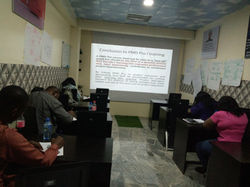





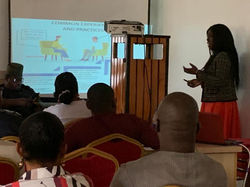





Quality Fleet Management Training: Relevance to Nigeria’s Development Sector

Fleet management is a critical but often underappreciated part of project delivery in Nigeria’s development sector. Vehicles support field visits, community engagement, supervision, monitoring, supply movement, referrals and emergency response. When fleet systems are weak, programme delivery suffers.
In many organisations, fleet management is treated mainly as a support function rather than a strategic operational system. As a result, insufficient attention is given to how vehicles are selected, used, maintained, monitored and budgeted for within the realities of the Nigerian operating environment.
To improve operational performance, organisations need fleet-management capacity that reflects both recognised good practice and the local realities in which projects are delivered.
Why Nigeria-relevant fleet management training matters
Fleet management principles are widely understood in theory, but their practical application often depends on context. In Nigeria, operating conditions vary significantly across states, terrains and sectors. Development and humanitarian organisations work in environments shaped by difficult roads, seasonal disruptions, inconsistent maintenance standards, fuel-control risks, security concerns and regulatory challenges.
Training that speaks directly to these realities can help organisations move from general understanding to practical implementation. It allows fleet-related decisions to be made with greater awareness of the conditions affecting vehicle performance, staff safety, cost control and continuity of activities.
Context-relevant training helps organisations ask better operational questions: Is the selected vehicle type suitable for the terrain and field demands? Are maintenance schedules aligned with actual usage conditions? Are fuel controls strong enough to detect loss or misuse? Are drivers equipped for the operational and behavioural risks they face? Are budgets reflecting the real cost of fleet use in the field?
Key fleet management issues within the Nigerian context
Road conditions and terrain
Projects often operate in areas with rough roads, erosion, flooding, heavy dust, long-distance travel routes and limited roadside support. These factors increase wear and tear and can shorten vehicle life if not properly planned for.
Seasonal disruption
During rainy periods, some project locations become difficult or impossible to access. This affects route planning, travel time, maintenance frequency and contingency arrangements.
Fuel management risks
Fuel is one of the most vulnerable fleet cost areas. Weak controls can lead to leakage, inflated consumption, undocumented purchases and hidden losses that accumulate across project cycles.
Maintenance quality and spare parts
Organisations may struggle to find reliable workshops, genuine spare parts or consistent repair standards, especially outside major urban centres. Weak maintenance oversight increases downtime and cost.
Security and duty of care
In some locations, insecurity, restricted movement windows and emergency-response limitations directly affect how fleet resources should be deployed. Driver conduct, communication systems and journey planning become especially important.
Regulatory and administrative compliance
Vehicle documents, insurance, licensing, roadworthiness and internal movement controls are not always monitored with enough discipline. Gaps in compliance can expose organisations to risk and disruption.
Why fleet management is not fully practised
Despite its importance, fleet management is often not fully institutionalised in project environments. One reason is that it is frequently seen as an administrative necessity rather than a performance function. Vehicles are assigned, fuel is purchased and repairs are made, but this does not automatically amount to effective fleet management.
Other common reasons include limited specialised training, weak or inconsistent documentation, reactive maintenance instead of preventive planning, poor coordination between programme, finance, procurement and operations teams, limited use of data for decision-making, absence of standard controls for fuel, servicing and utilisation, and management attention only when breakdowns or incidents occur.
In many cases, organisations are managing vehicles, but not managing the fleet as a system.
Why the cost of poor fleet management is often ignored
The financial impact of weak fleet management is easy to underestimate because the losses are rarely presented in one place. Instead, they are spread across different lines and departments. These hidden costs may include frequent breakdowns, high repair bills, excess fuel usage, vehicle misuse, delayed field movement, disrupted activities, emergency hiring of replacement vehicles, reduced staff productivity and faster asset deterioration.
Because these costs are dispersed, projects may absorb them without clearly recognising that they stem from preventable weaknesses in fleet management.
Why organisations fail to plan properly for fleet management
Fleet planning is often too narrow or too late. Vehicles may be procured or assigned without sufficient analysis of field realities, expected workloads, maintenance implications or replacement timelines. In some projects, planning focuses on acquiring vehicles rather than managing their full operational lifecycle.
Proper planning should consider terrain and accessibility, travel frequency and route demands, passenger and cargo needs, maintenance access, fuel availability and control, driver requirements, security considerations, seasonal changes, replacement and disposal planning, and budget implications over time.
Negative impact on project activities and funds
Poor fleet management affects far more than transport. It can directly reduce programme reach, quality and accountability. Its effects may include missed field visits, delayed implementation timelines, reduced supervision and monitoring, disrupted service delivery, safety risks for staff and communities, budget overruns, poor value for donor funds, reduced asset life, weak audit outcomes and loss of confidence in operational reliability.
When vehicles are unavailable, unsafe or too costly to operate, project delivery is affected. Fleet performance should therefore be understood as part of programme performance.
How C4AIK can support
C4AIK can help organisations strengthen fleet management through practical support tailored to the realities of development work in Nigeria. Support can include fleet-management training adapted to operational realities in Nigeria, reviews of current fleet practices and internal controls, fuel-management and accountability systems, preventive-maintenance planning tools, driver-management and safety guidance, fleet budgeting and lifecycle planning, reporting templates and tracking tools, advisory support for programme and operations teams, and organisational learning on the cost of poor fleet practices.
C4AIK’s support is designed to help organisations improve operational efficiency, reduce avoidable losses and strengthen the link between fleet management and project delivery.
Conclusion
Fleet management should not be treated as a secondary administrative concern. In Nigeria’s development sector, it is closely tied to safety, cost efficiency, operational continuity and programme effectiveness.
Organisations that invest in more practical, context-aware fleet-management capacity are better positioned to protect their assets, support their teams and deliver project activities more consistently.
Fleet management works best when it is not only understood in principle, but applied in ways that reflect the environment in which organisations actually operate.


Comments