















The Journey: Under what C4AIK platform has your organization interacted with Us?
Some partnerships are easy to describe because they happen through one project, one event, or one campaign. C4AIK’s relationship with NGOs and development actors in Nigeria is broader than that. Since 2011, different organizations have crossed paths with C4AIK through sports, learning activities, public visibility, field stories, radio engagement, and shared development impact.
That history matters because not every organization has interacted with C4AIK in the same way. Some came in through recreation and staff wellness alone. Some joined through sports and training. Others became visible through impact-sharing platforms that helped take their work into phone-in radio sessions beyond their own immediate network.
Across these platforms, one point must be clear: no organization has participated in all three programs. Not all organizations have had the chance to engage with C4AIK at every level. Each platform created a different kind of entry point, and each organization’s experience reflects the opportunity available to it at the time.

C4AIK’s engagement has grown through different platforms
C4AIK’s work with NGOs and development sectors in Nigeria did not follow a single path. It developed in phases, shaped by the needs of organizations, the energy of staff and volunteers, and the need to make development work more human, visible, and sustainable.
The three major platforms in this story are:
Platform | Year | Main form of engagement | Central value |
FIDAF | 2011 | Sports participation | Work-life balance and team bonding |
INGOsphere9ja | 2017 | Learning and training | Learning, collaboration, and organizational contribution |
MARKETsphere9ja | 2018 | Radio and centralized impact-sharing | Public visibility and wider reach |
Each platform had its own purpose. FIDAF opened a space for sports and staff well-being. INGOsphere9ja expanded the idea by combining Learning with training. MARKETsphere9ja gave organizations a way to share their impact through radio and a dedicated page on C4AIK’s site.
Together, these platforms show how C4AIK has supported development actors beyond project reports and field implementation. They show the value of rest, learning, visibility, storytelling, and connection.
FIDAF in 2011 made sports participation a serious tool for balance
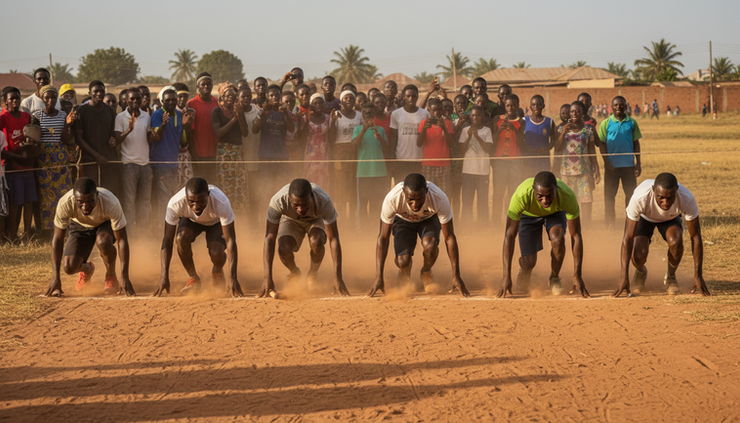
FIDAF marked one of C4AIK’s earliest structured engagements with NGOs and development-focused organizations in Nigeria. The 2011 platform focused on sports participation, but its meaning went beyond games and competition.
For many organizations in the development space, daily work can be demanding. Staff members often handle urgent community needs, field pressure, tight timelines, donor expectations, and emotional stories from the communities they serve. In that kind of environment, sports can become more than recreation. It can become a practical work-life balance tool.
Through FIDAF, C4AIK created a space where organizations could step away from routine work demands and participate in physical activity, shared play, and healthy competition. This served both the organizations and their staff in several ways.
For organizations, FIDAF helped build stronger internal relationships. A football match, relay, or shared sports activity can reveal teamwork in a different way. Staff who may only relate through projects, memos, or field assignments get to connect as people. This kind of informal connection can reduce tension and build trust.
For staff, FIDAF offered stress relief. Sports gave participants a chance to release pressure, reset mentally, and return to work with better energy. Even simple participation can help people feel seen beyond their job titles.
For teams, FIDAF encouraged unity across roles. In many organizations, program staff, finance teams, logistics officers, volunteers, drivers, and field workers may not always interact deeply. Sports can bring them into the same space, working toward a common goal.
For the wider NGO community, FIDAF created friendly interaction. Organizations that may work in different sectors, such as health, education, livelihoods, advocacy, or humanitarian response, could meet in a less formal environment. These connections matter because future collaboration often begins with familiarity.
FIDAF helped C4AIK show that development organizations also need spaces that care for the people behind the work. When staff well-being improves, organizational performance can also improve. People communicate better, morale rises, and the workplace feels less mechanical.
FIDAF’s focus on sports participation was simple, but its value was deep. It reminded organizations that rest, movement, play, and bonding are not distractions from serious development work. They are part of what keeps the work going.
INGOsphere9ja in 2017 connected sports with learning
By 2017, C4AIK’s engagement had taken a broader form through INGOsphere9ja. This platform carried forward the value of sports while adding training components. That combination gave organizations a richer way to participate.
The advantage was clear. Sports helped organizations build energy, bonding, and relaxed interaction. Training created room for learning, reflection, and improved practice. Together, they formed a more rounded platform for development actors.
Organizations that participated in INGOsphere9ja could benefit on two levels.
The first level was human connection. Through sports, staff and volunteers interacted outside the pressure of deadlines and reports. They could cheer, compete, laugh, and meet peers from other organizations. This built familiarity across the sector.
The second level was capacity growth. Through training, participants could exchange knowledge, sharpen skills, and reflect on their roles in development work. Training components may have included practical learning around organizational visibility, community engagement, teamwork, communication, leadership, or other development-related themes relevant to participants.
This combination made INGOsphere9ja different from a sports-only platform. It allowed organizations to contribute actively, not just attend.
For example, an organization working in community health could bring lessons from field outreach. Its staff might share how they gain trust in hard-to-reach communities. Another organization focused on education could contribute examples from literacy programs, youth mentoring, or school support. A livelihoods-focused group could bring insights from skills training, small enterprise support, or market access work.
Their roles could take several forms:
Participating in sports activities that built friendly relationships with other NGOs.
Joining training sessions to learn from C4AIK and peer organizations.
Sharing organizational experience from field programs.
Encouraging staff and volunteers to engage beyond daily work tasks.
Bringing sector-specific knowledge into a shared learning space.
This mattered because NGOs and development organizations often carry knowledge that remains inside their own project files. INGOsphere9ja created a space where that knowledge could be shared through participation, informal exchange, and structured learning.
It also helped balance energy with purpose. A team could compete on the field, then sit in a learning space and discuss how stronger teamwork affects project delivery. Staff could meet a peer during sports, then learn from that same person during a training conversation. Those connections can stay alive long after the event ends.
INGOsphere9ja showed that C4AIK was not only interested in gathering organizations for activities. It was also interested in helping them grow, contribute, and learn from one another.

MARKETsphere9ja in 2018 gave impact a wider voice
In 2018, C4AIK’s engagement expanded again through MARKETsphere9ja. This platform focused on sharing organizational impacts through radio and a centralized page on C4AIK’s site.
For NGOs and development actors, impact is often happening every day. A community receives support. A youth gains a skill. A household learns about health practices. A local group becomes better organized. A survivor receives referral information. A farmer learns a better method. Yet many of these stories remain unseen outside the immediate project area.
MARKETsphere9ja responded to that gap by helping organizations present their work in ways that more people could access.
Radio brought a special advantage. In Nigeria, radio remains one of the most accessible mass communication channels, especially for people who may not rely heavily on internet access. It can reach drivers, traders, farmers, households, students, and community members during daily routines. When an organization shares its work by radio, its message can travel into homes, markets, farms, shops, and public spaces.
A centralized page on C4AIK’s site offered a different benefit. It gave impact stories a stable home. Radio can spark immediate attention, while a web page can help preserve the information for later reference. Together, they create both reach and record.
This combination supported organizations in several practical ways.
It helped organizations explain what they do in plain language. Development work can become full of project terms. Radio forces clarity. A good radio message must be understandable to ordinary listeners.
It gave audiences real examples of impact. An organization supporting girls’ education could share how community engagement improved school attendance. A group working on livelihoods could explain how training helped participants start small income activities. A health-focused NGO could discuss awareness activities that improved knowledge in a community.
It helped communities identify support and services. When organizations speak publicly about their work, people can better understand what services exist, who they are meant for, and why they matter.
It gave C4AIK a shared reference point for partner visibility. A centralized site page can gather different organizations’ stories in one place. This makes it easier for visitors, partners, media contacts, and development stakeholders to see a range of work without searching across many channels.
The effect can be powerful. A radio feature may lead to more community awareness. A web story may help a partner understand an organization’s focus. A documented impact story may support credibility when an organization introduces itself to a new audience. A clear public profile may also help staff feel proud that their work is visible.
MARKETsphere9ja made impact less hidden. It helped organizations move part of their story from internal reporting to public understanding.

The platforms are connected, but the participation has not been the same
Looking across FIDAF, INGOsphere9ja, and MARKETsphere9ja, it becomes clear that C4AIK’s engagement has not been one-size-fits-all. Each platform invited a different kind of participation.
FIDAF asked organizations to show up through sports and staff wellness. INGOsphere9ja invited them into a wider space of sports and training. MARKETsphere9ja helped them share their work through radio and a centralized online presence.
These are connected ideas, but they are not the same experience.
That is why C4AIK emphasizes that although no organization has participated in all three programs yet, it is something we are working to actualize as a standard. This is not a mark against any organization. It simply reflects access, timing, readiness, and opportunity. Some organizations may have been active in 2011 but did not participate in later platforms. Some may have joined in 2017 through INGOsphere9ja. Others may have become visible in 2018 through MARKETsphere9ja.
Not every organization has had the chance to engage with C4AIK at all levels.
This distinction matters for fairness and clarity. When people ask how an organization has interacted with C4AIK, the answer should be tied to the specific platform. Participation in FIDAF is different from participation in INGOsphere9ja. Exposure through MARKETsphere9ja is different from sports engagement. Each one carries its own value and should be recognized on its own terms.
It also gives organizations a way to understand their history with C4AIK more accurately. Instead of making broad claims, they can name the platform through which they participated and describe what that experience involved.
For C4AIK, this creates a clearer record. For organizations, it creates a better way to tell their own connection story.
What these engagements say about C4AIK’s approach
C4AIK’s work with NGOs and development sectors in Nigeria since 2011 shows a practical understanding of what organizations need beyond funding and project implementation.
They need staff who feel balanced. FIDAF addressed that through sports.
They need learning spaces where organizations can share experience and grow. INGOsphere9ja addressed that through sports and training.
They need visibility for the work they are already doing. MARKETsphere9ja addressed that through radio and a centralized page.
The strongest thread across the three platforms is participation. C4AIK did not only create spaces for organizations to be listed. It created spaces where they could play, learn, contribute, speak, and be seen.
That kind of engagement has value because development work is built on people. Programs need skilled teams. Teams need energy. Communities need clear information. Organizations need channels to show impact. The public needs better access to stories of change.
Each C4AIK platform met one part of that wider need.
The next step is to identify your platform clearly
For any organization that has interacted with C4AIK, the most useful step is to identify the exact platform of engagement. Was the connection through FIDAF in 2011 and sports participation? Was it through INGOsphere9ja in 2017 with sports and training? Was it through MARKETsphere9ja in 2018 through radio and the centralized impact page?
Clear identification helps everyone. It helps C4AIK maintain a better history of engagement. It helps organizations describe their involvement more accurately. It also helps future partners understand the type of relationship that existed.

C4AIK’s engagement with NGOs and development sectors in Nigeria has grown across time, from sports and work-life balance to training and public impact-sharing. Each platform has served a specific purpose. Each has created value in its own way. No organization has participated in all three, and that makes it even more important to name the exact point of interaction.
Under what C4AIK platform has your organization been interacting with C4AIK?



Comments