









Why Many HR Professionals Struggle and How Continuous Learning Can Improve Success
HR work looks straightforward from the outside. Hire people, handle policies, answer questions, support managers, keep the organization compliant. Inside the role, it often feels very different.
Many HR professionals carry a wide mix of duties that require legal knowledge, emotional intelligence, data skills, conflict management, coaching, process design, and business judgment. They may be expected to solve sensitive problems quickly, often with limited staff, unclear authority, or outdated tools.
When HR struggles, it rarely comes down to a lack of effort. More often, the problem is a gap between what the role demands and the training, resources, and support available. The good news is that this gap can be closed. Continuous learning, better systems, and clearer priorities can help HR professionals become more confident, more effective, and less reactive.

HR has become a much broader role than many people realize
The HR function has changed a lot. In many organizations, HR is no longer limited to payroll forms, employee files, and benefits questions. HR teams now support culture, employee relations, compliance, workforce planning, retention, learning, performance, compensation, and manager coaching.
That range can be exciting. It can also be overwhelming.
A single HR generalist might be asked to:
Investigate a harassment complaint
Coach a first-time manager through a performance issue
Interpret leave requirements
Help redesign onboarding
Improve employee engagement
Review compensation concerns
Support layoffs or restructuring
Track policy updates across multiple states
Answer urgent benefits questions
Each task requires a different skill set. Some require precision. Some require empathy. Some require discretion. Some require fast judgment under pressure.
This wide scope is one reason many HR professionals feel like they are always catching up. They may be strong in recruiting but less confident in employee relations. They may understand policy but feel unsure about analytics. They may be trusted by employees but struggle to influence senior leaders.
The role asks HR to be both human and technical. That balance takes time to build.
Lack of training creates early confidence gaps
Many people enter HR from related fields, such as operations, administration, recruiting, customer service, or management. Others study HR formally but discover that real workplace situations are messier than textbooks.
A new HR professional may know the basics of compliance or employee life cycle management, but still feel unprepared for moments like these:
An employee reports bullying but asks HR not to tell anyone.
A manager wants to terminate someone immediately with little documentation.
A team member requests accommodation and the manager reacts poorly.
Two employees describe the same conflict in very different ways.
Leadership asks HR to “fix morale” without changing the conditions causing the problem.
These situations do not come with scripts. They require judgment, calm communication, and a clear process.
Training gaps often show up in a few common areas.
Employee relations
Employee relations work can be stressful because the stakes are personal. HR professionals must listen carefully, document accurately, avoid bias, and follow a fair process. Without training, it is easy to jump too quickly into advice-giving or to miss key facts.
Employment law and compliance
HR does not need to act as legal counsel, but it does need a working understanding of wage and hour rules, leave laws, anti-discrimination protections, accommodations, recordkeeping, and privacy expectations. These areas change, and mistakes can have serious consequences.
Manager coaching
Managers often look to HR for help with difficult conversations. If HR has not been trained in coaching skills, feedback models, or performance documentation, support can become inconsistent.
Data and systems
Modern HR teams increasingly rely on data, such as turnover trends, time-to-fill, engagement results, absentee patterns, and pay equity indicators. Many HR professionals never receive enough training in how to interpret or explain this information.
Confidence grows when training connects directly to real situations. General knowledge helps, but practical case studies, role-play, mentoring, and guided reflection help HR professionals apply what they learn.
Inadequate resources make good HR work harder
Even well-trained HR professionals struggle when they lack the tools, time, and staffing needed to do the work well.
Some HR departments operate with small teams supporting large employee populations. Others work with outdated systems, scattered employee records, manual processes, or unclear approval chains. In these conditions, HR spends too much time chasing information and too little time solving the real issue.

Resource gaps may include:
Limited HR staff for the size or complexity of the organization
No reliable HR information system
Inconsistent documentation practices
Little access to legal guidance
Weak onboarding materials
No budget for training or certification
Poor manager training
Unclear policies or policies that no one follows
Lack of support from senior leadership
When resources are thin, HR becomes reactive. The team answers urgent questions, handles complaints, fills vacancies, and fixes payroll or benefits problems. Strategic work gets pushed aside because the immediate work never stops.
This cycle can create burnout. HR professionals may know what should be done, but lack the capacity to do it. That gap can feel frustrating and isolating.
The solution is not to tell HR to “work smarter” while leaving the same broken systems in place. HR needs realistic workloads, useful technology, decision-making authority, and leadership support. Without those, even talented professionals will struggle.
Workplace dynamics keep changing
Workplaces have changed in ways that affect nearly every HR process. Remote work, hybrid schedules, multigenerational teams, mental health concerns, pay transparency, artificial intelligence, employee activism, and shifting expectations around flexibility have all added new complexity.
Many organizations are still learning how to manage these changes. HR is often expected to guide the transition, even when there is no clear playbook.
Employees expect more transparency
Employees want clearer communication about pay, promotion paths, flexibility, discipline, and company decisions. Vague answers can damage trust. HR professionals need strong communication skills and policies that can stand up to questions.
Managers need more support
Many managers became leaders because they were good at technical work, not because they were trained to lead people. HR often becomes their coach, sounding board, and guardrail. That requires patience and skill.
Conflict can surface faster
Workplace conflict can unfold across email, chat platforms, video calls, shared documents, and in-person interactions. Misunderstandings can escalate quickly. HR must be ready to assess facts across different channels while keeping the process fair.
Culture is harder to shape
Culture is no longer built only through shared physical space. Hybrid and remote teams need intentional rituals, clear norms, and better manager communication. HR plays a key role, but culture cannot rest on HR alone.

These shifts require ongoing learning. A policy that worked five years ago may not fit current expectations. A communication style that worked for one workforce may fail with another. HR success now depends on the ability to adapt while staying grounded in fairness, consistency, and sound judgment.
HR work carries emotional weight
One reason HR struggles often goes unspoken: the job can be emotionally heavy.
HR professionals hear about layoffs, harassment, grief, illness, conflict, pay stress, discrimination, burnout, and performance failures. They may support employees through painful moments while also representing the organization’s policies and legal obligations.
This position can create tension. Employees may expect HR to be their advocate. Leaders may expect HR to protect the company. A skilled HR professional must do both in a fair and ethical way, which is not always simple.
The emotional demands of HR can include:
Staying calm when others are angry or afraid
Delivering difficult news
Managing confidential information
Supporting people without absorbing every problem
Making unpopular recommendations
Being blamed for decisions made elsewhere
Switching quickly from crisis response to routine tasks
No one performs well for long without recovery and support. HR professionals need peer networks, supervision, clear boundaries, and space to process difficult cases. Continuous learning should include not only technical skills, but also emotional resilience and ethical decision-making.
Continuous learning is now part of the job
The best HR professionals do not rely only on what they learned years ago. They keep updating their knowledge because the work keeps changing.
Continuous learning does not always mean earning a new credential, though certifications and formal programs can be valuable. It can also mean reading legal updates, attending webinars, practicing difficult conversations, joining professional groups, reviewing case studies, or asking for feedback after a challenging situation.
Professional development in HR matters because it helps professionals:
Make better decisions with less hesitation
Understand risk without becoming fear-driven
Communicate policies more clearly
Support managers with confidence
Notice patterns in employee concerns
Improve processes instead of repeating fixes
Build credibility with leadership and employees
Learning also reduces isolation. When HR professionals connect with peers, they realize many challenges are common. That perspective can make the role feel more manageable.
A strong learning habit turns experience into skill. Without reflection, a person can repeat the same year of experience over and over. With reflection, each difficult case becomes a chance to improve judgment.
Practical ways HR professionals can improve effectiveness
Improvement does not require doing everything at once. The most effective approach is to identify the largest gaps, then build steady habits around them.
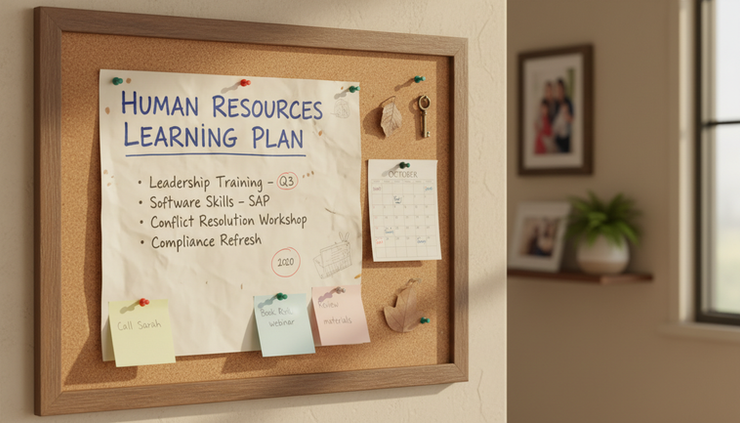
Build a personal learning plan
A learning plan keeps development focused. It should connect to the actual demands of the role, not just broad interests.
A simple plan might include:
Skill area | Learning activity | Practical application |
Employee relations | Take a course on investigations | Create a checklist for intake conversations |
Compliance | Review monthly legal updates | Update policies and manager guidance |
Manager coaching | Practice feedback conversations | Build templates for performance discussions |
HR data | Learn basic reporting methods | Track turnover by department or role |
Communication | Study plain-language writing | Rewrite confusing employee policies |
The goal is not perfection. The goal is steady progress that shows up in daily work.
Strengthen documentation habits
Good documentation protects employees, managers, and the organization. It also helps HR think clearly.
Useful documentation should be timely, factual, and organized. It should separate observations from opinions. For example, “The employee arrived after 9:30 a.m. on four dates this month” is stronger than “The employee has a bad attitude about attendance.”
HR professionals can improve documentation by using consistent templates for:
Employee complaints
Investigation notes
Performance concerns
Accommodation discussions
Corrective action
Manager coaching sessions
Create repeatable processes
Many HR problems become harder because the process is unclear. Repeatable steps reduce confusion and help HR stay fair.
For example, an employee relations process might define:
How concerns are received
Who reviews the concern
What information must be gathered
How confidentiality is explained
How findings are documented
How follow-up occurs
Clear processes also help managers understand what HR needs from them.
Invest in manager education
HR cannot carry people management alone. Managers shape the daily employee experience. When they lack training, HR receives the consequences.
Manager education should cover practical topics, such as:
Giving clear feedback
Documenting performance
Handling attendance issues
Responding to complaints
Supporting accommodations
Communicating change
Avoiding retaliation
Recognizing bias
Short, repeated training sessions often work better than one long annual session. Managers need reminders, examples, and tools they can use right away.
Use peer support and mentoring
HR professionals benefit from trusted peers who understand the work. A mentor or peer group can help test assumptions, discuss difficult situations in general terms, and offer perspective.
Peer support is especially helpful for solo HR practitioners, who may not have anyone internally who understands the complexity of their role.
Learn the business, not just HR
HR gains influence when it understands how the organization works. That includes revenue drivers, staffing needs, customer expectations, operational constraints, and leadership priorities.
This knowledge helps HR make better recommendations. It also helps leaders see HR as a strategic partner rather than only a policy function.
What organizations can do to support stronger HR
HR professionals can take ownership of their growth, but organizations also need to create conditions for success. A company that underfunds HR should not be surprised when HR becomes reactive.
Organizations can support HR by:
Funding ongoing training and professional memberships
Providing access to legal or specialist guidance when needed
Reviewing HR staffing levels honestly
Investing in reliable HR technology
Giving HR a voice before major people decisions are made
Holding managers accountable for people leadership
Creating clear escalation paths for sensitive issues
Respecting the confidentiality and complexity of HR work
Support from leadership matters. When leaders ignore HR advice until a crisis occurs, they weaken the function. When they include HR early, better decisions become possible.
Progress starts with one honest gap
HR is demanding because it sits at the center of people, policy, risk, and change. Struggle in the role does not mean someone is not suited for HR. It often means the role has outgrown the training, tools, or structure around it.
The path forward starts with honest assessment. Which part of the role creates the most stress right now? Employee relations? Compliance? Manager coaching? Data? Communication? Start there.
One focused learning goal, one better template, one clearer process, or one stronger peer connection can improve daily work. Over time, those small improvements build confidence and credibility.
HR professionals do their best work when they keep learning, ask for support, and build systems that make good judgment easier. The work will always involve complexity, but it does not have to feel like constant survival. Continuous growth gives HR a steadier foundation, and that helps the whole organization work better.



Comments